When it comes to cooling solution, the debate between water cooling or air cooling has been ongoing for years. Because each cooling method comes with its own set of advantages and disadvantages, making the decision-making process crucial for businesses looking to invest in the right penumatic sealer. In this blog, we’ll delve into the history of pneumatic sealer, explore innovative cooling technologies, and provide a practical guide to help you choose between water cooling and air cooling for your sealer machine.
I. The Evolution of penumatic sealer
The world’s first fully automatic forming-filling-pneumatuc sealer machine was manufactured in Germany in 1911. Contrary to what some might believe, it hasn’t been around for nearly 200 years. Over the years, sealing machines have undergone significant advancements, with cooling technologies playing a pivotal role in enhancing their performance and efficiency.
II. Beyond Binary: The Rise of Hybrid Cooling Solutions
Gone are the days when water cooling and air cooling solution were seen as mutually exclusive options. Today, pneumatic sealer manufacturers are integrating the flexibility of air cooling with the efficiency of water cooling to create hybrid cooling solutions that optimize performance while reducing energy consumption.
A. Japanese Innovation: Sensor-Driven Cooling
A Japanese manufacturer has combined the flexibility of air cooling with the efficiency of water cooling by incorporating sensors that monitor temperature in real-time. This allows the machine to automatically switch between cooling modes and control the cooling ratio using PID algorithms. As a result, energy consumption is reduced by 30%, and the sealing pass rate is increased to 99.5%.
B. German Breakthrough: Phase Change Material (PCM) Cooling
A German laboratory has embedded phase change materials (such as paraffin and salts) inside pneumatic sealer machines to leverage their melting heat absorption properties for passive cooling. Their “PCM Sealing Module” maintains a temperature below 40℃ even after 1,000 consecutive seals, extending equipment life by twice as long as traditional air-cooled models.
C. Customized cooling Solutions for Specific Needs
For a dairy company requiring microbial-free food packaging, a customized “sterile water-cooled sealing machine” was developed. In electronic component sealing, an ion generator is installed at the fan outlet to neutralize static electricity in the air, reducing product defect rates by 80%.
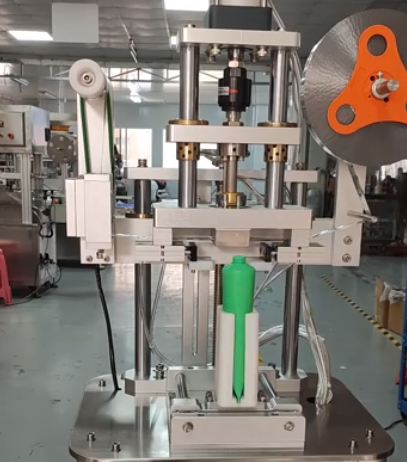
III. Choosing the Right cooling solution: water cooling vs air cooling
Are you planning for customized pneumatic sealer machine?
Before deciding between water cooling and air cooling, it’s essential to answer the following questions:
A. Purchase History and Problem-Solving
Are you purchasing a sealing machine for the first time or upgrading your existing equipment?
What issues did you encounter during previous usage, and what problems are you looking to solve?
B. Application Scenario
Please ask yourself two questions:
First quesiton, what is the temperature and ventilation like in your production environment?
Then, are you sensitive to noise? Is the machine for temporary or long-term use?
C. Production Volume
How many items do you plan to seal per day or hour?
D. Budget and Maintenance
Do you have a sufficient budget?
How many people will be involved in the later maintenance of the machine?
IV. Water Cooling or Air Cooling: how to choose
A. Prioritize Water Cooling for:
High-power/continuous operation models (e.g., fully automatic high-speed sealing machines)
High-temperature/enclosed environments (e.g., factory workshops, places without air conditioning)
Noise-sensitive environments (e.g., hospitals, libraries)
B. Recommend Air Cooling for:
Low-power/intermittent operation models (e.g., manual or semi-automatic small sealing machines)
Low-temperature/well-ventilated environments
Mobile or temporary usage scenarios (e.g., exhibitions, outdoor events) due to their portability and lack of complex installation requirements
V. Additional Considerations
When making your decision, also consider your budget, maintenance capabilities, environmental requirements, and the level of intelligent development in the pneumatic sealer industry.
VI. Conclusion
Choosing the right pneumatic sealer machine involves a careful evaluation of your specific needs, production environment, and budget. By understanding the advantages and disadvantages of water cooling and air cooling, as well as considering innovative hybrid solutions, you can make an informed decision that enhances your production efficiency and product quality. If you’re planning to purchase a pheumatic sealer machine, don’t hesitate to contact HITIONS for expert advice and customized solutions tailored to your business needs.