Type of fit within mechanical engineering design and manufacturing pertains to the correlation between the machining tolerance zones of holes and shafts that share the same fundamental size. This element is crucial for guaranteeing assembly precision, operational reliability, and the longevity of mechanical components. Fits are primarily classified into three categories: gap fit, transition fit, and interference fit. Each category has unique traits and uses, playing essential roles in the overall performance of mechanical systems.
i. GAP TYPE OF FIT
Defined as a fit type where the size of the hole is greater than or equal to that of the shaft, allowing for free rotation of the shaft within the hole, gap fit exhibits several key attributes. It offers high flexibility and adaptability, accommodating certain dimensional and form errors. Assembly processes are streamlined, eliminating the need for forceful insertion. Furthermore, the presence of a free-moving space between parts minimizes friction and wear, thereby extending component lifespan. However, gap type of fit compromise on positional accuracy and load-bearing capacity. It is predominantly utilized in components requiring relative motion, such as sliding bearings and pistons within cylinder walls. Additionally, gap fits type finds applications in scenarios necessitating lubricant retention or error compensation.
Type of fits under specific conditions:
H/h (Basic Deviation Fit):
Hole: H (lower deviation = 0); Shaft: h (upper deviation = 0). Gap range determined by tolerance grade.
Example: H7/h6 (sliding bearing-to-shaft fit).
F/f Fit:
Larger clearance for high-mobility applications (e.g., piston-cylinder interfaces).
G/g Fit:
Less room for precision sliding parts (such linear bearings and guide rails).
Types of fit Applications:
1.Rotating components (bearings, gears).
2.Sliding mechanisms (drawer guides, hydraulic cylinders).
3.Thermal expansion compensation (e.g., pipe flanges).
Let’s make an example for Gap Type of fit
In some small pneumatic sealer a certain gap is left between the cylinder piston and the inner wall of the cylinder. The size of the clearance type of fit needs to be precisely designed according to factors such as the working pressure, motion speed, and lubrication conditions of the cylinder. If the gap is too small, it will increase the motion resistance of the cylinder and may even cause it to jam. Conversely, if the gap is too large, it will affect the motion accuracy and sealing performance of the cylinder.
ii. Transition TYPE OF fit
Transition fit presents a versatile scenario where a hole and shaft may exhibit either a gap or interference upon assembly. This type of fit ensures component alignment and coaxiality while facilitating easy disassembly and reassembly. It balances flexibility and adaptability to suit various operational conditions. By guaranteeing alignment and coaxiality, transition fit enhances assembly precision. Moreover, its ease of disassembly facilitates maintenance and component replacement. While its load-bearing capacity and sealing performance may be slightly inferior to interference type of fit, transition fit is extensively employed in precision mechanical components that require frequent disassembly, such as rolling bearing connections and transmission system components.
Lear more about how to gurantee the good quality of complext partts assembly.
Type of fits under specific conditions:
M/m Fit:
Hole: M ( lower deviation near 0, upper deviation positive); Shaft: m (lower deviation negative, upper deviation near 0).
Example: M7/m6 (gear-to-shaft positioning fit).
K/k Fit:
Narrow clearance/interference range for medium-precision alignment (e.g., motor rotor-to-shaft).
JS/js Fit:
Symmetrical tolerance zone for bidirectional positioning (e.g., optical instrument mounts).
Applications:
1. Keyed connections (gears, pulleys).
2.Motor rotor-stator alignment.
3.Precision-guided components in machinery.
iii. interference Type Of fit
Characterized by a hole size smaller than that of the shaft, interference type of fit achieves component connection through elastic deformation of materials. This fit type is distinguished by its simplicity, excellent centering ability, and high load-bearing capacity. Connections are robust, withstanding high impact forces. However, the assembly process is more challenging, demanding high processing accuracy. Interference fit is ideal for applications demanding high torque transmission or prevention of connection detachment, like gear-to-shaft connections and hub assemblies. It is also crucial in sealing applications, such as bearing-to-housing connections, to minimize leakage risks.
Common Subtypes of fit:
P/p Fit:
Small interference for light-duty or frequently disassembled parts (e.g., belt pulleys, couplings).
R/r Fit:
Moderate interference for general mechanical drives (e.g., universal joint-to-shaft).
S/s Fit:
Heavy interference for high-load or high-speed rotating components (e.g., flywheel-to-crankshaft).
T/t Fit:
Extreme interference requiring specialized processes (e.g., rolling mill bearing-to-roll neck).
Applications:
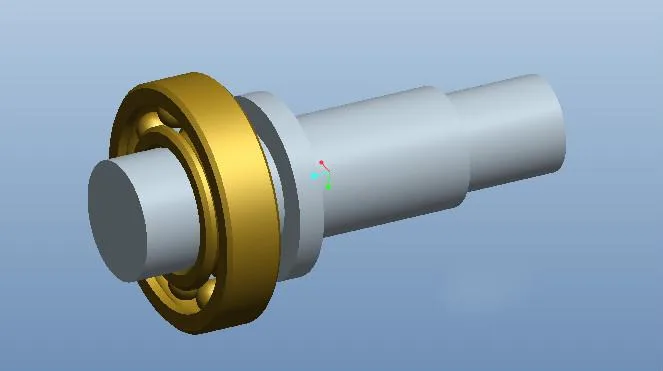
1.Press-fit type bearings.
2.Wheel hub-to-axle connections (automotive, aerospace).
3.High-pressure pipe flange seals, for example, the interference type of fit between the piston and the piston pin plays a crucial role in the normal operation of the engine, as it can withstand high – temperature and high – pressure conditions.
iv. Specialized Types of fit
Line Fit:
Near-identical hole/shaft dimensions result in a line-contact interface (e.g., precision linear guides).
Free Fit:
Extremely loose clearance type of fit allowing unrestricted component movement (e.g., decorative trim installations).
Tight Fit:
Colloquial term for transition fits requiring moderate assembly force.
Example Comparison
| Type of fit | Typical Application | Assembly Method | Disassembly Difficulty |
|---|---|---|---|
| Clearance Fit shaft9.9mm,hole 10mm | Bearing inner race-to-shaft,imprecise types of fit | Direct installation | Easy |
| Transition Fit shaft 10(0,+0.03)mm,hole(0,+0.05)mm | Gear-to-keyway,precice fit type | Light pressing/tapping | Moderate |
| Interference Fit shaft10.1mm,hole10mm | Flywheel-to-crankshaft,imprecisetype of fit | Hydraulic pressing/heating | Difficult |
v. Key Considerations for Fit in mechanical engineering
Functional Requirements: Motion type (rotation/sliding), positional accuracy, or load-bearing capacity.
Load Conditions: Static, dynamic, impact, or vibratory environments.
Material Properties: Thermal expansion coefficients, hardness, and surface treatments.
Manufacturing Constraints: Tolerance control capabilities and available assembly tools.
Cost Efficiency: Balancing performance with production and maintenance expenses (interference fits often raise costs).
vi. How to Choose Between Clearance, Transition and Interference type of Fits
Step1:Consider the motion state
1.In the case of relative motion: When there is relative motion between parts and the motion speed is high, clearance types of fit is usually chosen. This is because if the clearance is too small, excessive friction between the moving parts during operation will lead to increased wear. Clearance fit, on the other hand, can provide sufficient space for the relative motion of the parts, reducing wear.
2.In the case of relative stillness: For relatively stationary aluminum alloy parts, transition or interference type of fit is generally selected. Among them, if the parts are subjected to greater pressure, the required clearance becomes smaller, which means the interference amount should be larger. An increased interference amount makes the connection between the parts tighter, enhancing both the transmission capacity and impact resistance. However, the interference amount should not be excessively large; otherwise, the parts are prone to damage during the assembly process.
Step2:Consider the accuracy requirements
1.High accuracy requirements: When there are high requirements for the positioning accuracy of the parts, transition type of fit is a more appropriate choice. Transition fit can not only ensure a certain degree of connection strength but also effectively control the positional accuracy of the parts.
2.Low accuracy requirements: If there are no high accuracy requirements, clearance type of fit is generally preferred. This is because clearance fit facilitates assembly and improves assembly efficiency, making it the most widely used in practical applications.
Step2:Consider the disassembly frequency
1.Frequent disassembly: If the parts need to be disassembled frequently and there is relative motion, clearance fit is usually adopted, as it makes the disassembly and installation of the parts more convenient. Even in the absence of relative motion, clearance is mostly used type of fit when frequent disassembly is involved.
2.Occasional disassembly: For parts that are disassembled occasionally and have no relative motion, both transition fit and clearance fit can be chosen.
3.No disassembly: If the parts are basically not disassembled after installation, either transition or interference fits type can be selected to ensure the stability and reliability of the part connection.
Conclusion
In summary, gap type of fit, transition type fit, and interference type of fit each serve distinct purposes and exhibit unique characteristics within mechanical design and manufacturing. The selection of a fit type primarily hinges on specific usage requirements and operating conditions. Practical applications necessitate comprehensive consideration of factors such as machining tolerance analysis, component materials, heat treatment states, and stress conditions during use to determine the most suitable fit. By meticulously choosing the right fit type, mechanical systems can achieve optimal performance, reliability, and longevity.
If you’re working on a fit type product development project, please do not hesitage to contact us at Hitions! As professionals in the field, we’re eager to provide a free, detailed analysis tailored to your specific needs. Let’s collaborate and make your project a success! cindy@hitions.com