Many clients send us 3D files for quote requests, specifying anodizing as the surface treatment for aluminum parts. In such cases, we always ask them one crucial question: Do you want sandblasting? And what’s your requirement for surface finish? Why are processing plants so concerned about whether sandblasting is required before anodizing aluminum? As a processing plant, let me explain the reasons.
I. Skipping Sandblasting: A Cost-Saving Measure or a Recipe for Disaster?
II. Sandblasting Classification by Particle Size and Application
III. Skipping Sandblasting before anodizing: When Can It Be Omitted?
IV. Alternative Pretreatment Methods to Sandblasting
V. Sandblasting vs. Non-Sandblasting: Making the Right Selection
vI: what to do if the defects happen on the surface of Anodized Aluminum?
vII: Common FAQs (frequently asked questions)
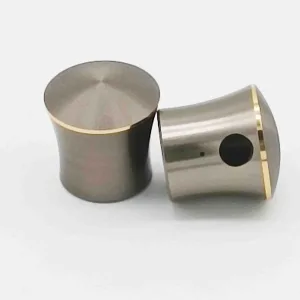
I.Skipping Sandblasting: A Cost-Saving Measure or a Recipe for Disaster?
1.1 Surface Preparation via Abrasive sandBlasting Prior to Anodizing: Key Objectives
Eliminate Substrate Imperfections: Achieves comprehensive removal of surface irregularities, ensuring homogeneous oxide layer formation.
Strengthen Film-to-Substrate Bonding: Enhances mechanical adhesion of the anodic coating, contributing to extended service life.
Mask Minor Surface Blemishes: Reduces visual of superficial flaws, improve visual consistency in the finished product.
Aluminum alloy surfaces may exhibit slight color variations, processing marks, or material inhomogeneity. Active terminology: “Controlled surface erosion” replaces “uniform abrasion effect” to emphasize precision. “Diminish visibility” substitutes “make less noticeable” for technical depth. Outcome-focused flow: Links sandblasting’s action (“roughens”) directly to the anodized result (“homogenous matte texture”). Specifies compliance with “premium product standards” to situate the importance. Aesthetic emphasis: Uses “flawless, aesthetically uniform” to reinforce the value proposition for premium markets.
1.2 Surface Functionalization and Texture Engineering for Targeted Performance
Enhanced Traction for Safety-Critical Applications: For components demanding slip resistance—such as vehicle wheels or stairway handrails, abrasive blasting generates a micro-textured surface that amplifies frictional forces, thereby improving grip and reducing accident risks.
Thermal Management Optimization for Electronics: Heat sinks in electronic assemblies necessitate maximized surface area to enhance convective heat transfer. Sandblasting achieves this by creating a finely roughened topography, boosting thermal dissipation efficiency without sacrifying structural integrity.
1.3 Surface Texture Modification for Enhanced Functional Performance by sandblasting before anodizing
Thermal Conductivity Augmentation via Controlled Surface Roughening:
Abrasive blasting intentionally introduces micro-scale surface irregularities, which amplify convective heat transfer by expanding the effective surface area. This makes it ideal for thermal management components in power electronics or industrial heat exchangers.
Sealant Adhesion Optimization for Pressure-Critical Environments:
The micro-textured topography generated by sandblasting enhances mechanical interlocking between sealants and substrates, ensuring superior hermetic sealing. This is indispensable for aerospace, naval, and automotive applications demanding zero-leakage performance under extreme pressure variations.

1.4 Optimized Substrate Conditioning for Downstream Finishing Operations
Enhanced Dye Penetration Through Micro-Textured Surfaces:
Sandblasting creates a controlled micro-roughened topography that expands the effective surface area for dye adsorption. This ensures uniform color saturation and depth in anodized oxide layers, critical for high-precision aesthetic applications such as consumer electronics and architectural cladding.
Superior Coating Bond Strength for Post-Anodization Spray Processes:
When spray coatings (e.g., protective polymers or corrosion inhibitors) are applied after anodizing, the micro-abrasive profile generated by sandblasting fosters mechanical interlocking at the oxide-coating interface. This significantly reduces delamination risks, prolong service life in harsh environments like automotive underbodies or marine equipment.
1.5 Optimizing Production Processes: Balancing Efficiency and Cost
1.5.1 Streamlining Pretreatment for Cost Efficiency
Traditional multi-step process challenges: Without sandblasting, achieving a flawless surface demands sequential chemical treatments followed by manual polishing. This approach is time-consuming, labor-intensive, and drives up material and operational costs.
Sandblasting’s one step solution: By integrating surface cleaning, activation, and roughening into one operation, sandblasting eliminates the need for repetable chemical treatments and manual finishing.
1.5.2 Optimizing for High-Volume Manufacturing and Consistent Throughput
Sandblasting: Automative Efficiency for Large-Scale Production: Sandblasting systems enable uninterrupted, high-speed processing (e.g., treating hundreds of m² of aluminum alloy hourly) through roboticized workflows.This scalability ensures stable production capacity, even during peak demand, while decrease labor dependency and operational variability.
Chemical Cleaning: Process Sensitivity and Capacity Constraints:
Chemical pretreatment methods demand precise control over parameters like dwell time, temperature, and solution concentration. Variations in these factors can lead to inconsistent surface quality, requiring frequent adjustments that disrupt production continuity and limit throughput scalability. Batch-to-batch variations can lead to fluctuations in anodizing quality. Unlike chemical methods, which are sensitive to environmental change and parameter deviations, sandblasting relies on a controlled mechanical abrasion process.
This inherent stability minimizes variability in surface treatment outcomes, consistently reducing defect rates such as uneven roughness, incomplete cleaning, or localized over-processing. Reading more tips about how to save cost in cnc machining.
II. Sandblasting Classification by Particle Size and Application
Coarse-Grit Abrasives (Low Mesh Number)
Designed for heavy-duty industrial applications, these larger particles (e.g., 16–40 mesh) create aggressive surface profiles ideal for equipment housings requiring enhanced wear resistance, impact durability, or adhesive bonding strength. Typical uses include machinery enclosures, structural components, and automotive chassis parts.
Fine-Grit Abrasives (High Mesh Number)
Comprising smaller particles (e.g., 120–400 mesh), this category delivers precision surface finishing for applications prioritizing aesthetic appeal or functional performance. It produces smooth, uniform textures suitable for consumer electronics, medical devices, and decorative coatings where tactile quality or corrosion resistance is critical.
High-Mesh Abrasive Media (Fine Particle Size)
Ideal for consumer electronics enclosures requiring a smooth, refined tactile finish, this fine-grit sandblasting approach minimizes surface roughness while maintaining subtle texture. It delivers a premium handfeel suitable for handheld devices like smartphones, tablets, and wearables.
Mixed Sand
Employed for artistic decorative pieces to create unique textures.
III. Skipping Sandblasting before anodizing: When Can It Be Omitted?

Anodizing can be performed without sandblasting if the aluminum alloy surface meets the following conditions:
Excellent Surface Quality
The aluminum alloy has undergone precision processing (such as CNC milling and polishing), resulting in a surface free of scratches, burrs, or oxide scales, with a roughness that meets anodizing requirements (e.g., Ra ≤ 0.8μm).
Low Requirements for Oxide Film Adhesion
In certain application scenarios (such as decorative anodizing), the requirements for film adhesion may be low, or chemical pretreatment (such as alkaline washing and acid washing) can ensure sufficient adhesion.
Pursuit of Specific Surface Effects
Sandblasting creates a uniform matte finish. If the mechanical polishing gloss or mirror effect needs to be retained, sandblasting must be omitted.
Cost and Efficiency Priorities
Sandblasting incurs additional costs for equipment, abrasives, and labor, and may extend the production cycle. For mass production or cheap products, skipping sandblasting can reduce costs.
IV. Alternative Pretreatment Methods to Sandblasting
If sandblasting is not performed, other pretreatment processes must be employed to ensure anodizing quality:
1.Chemical cleaning
Alkaline washing: Using a sodium hydroxide solution (5-10% concentration) to remove surface oil, oxide scales, and natural oxide films.
Acid washing: Using nitric or sulfuric acid solutions (3-5% concentration) to neutralize alkaline washing residues and further activate the surface.
Deionized water rinsing: Preventing electrolyte contamination by impurities.
2.Mechanical polishing
Mechanical polishing means achieving a smooth surface through cloth wheel polishing, electrolytic polishing, etc. It is suitable for scenarios requiring high gloss (such as mobile phone rear housings). However, excessive polishing can result in a surface that is too smooth, reducing oxide film adhesion.
3.Brushed finish
Creating a uniform texture on the aluminum alloy surface through linear friction with sanding belts or scouring pads. Brushing not only enhances appearance but also improves oxide film adhesion through micro-grooves.
4.Shot penning
Similar to sandblasting but using spherical abrasives (such as steel shots) with a gentler impact force. Shot peening is suitable for scenarios with lower surface roughness requirements.
V. Sandblasting vs. Non-Sandblasting: Making the Right Selection
| Comparison Item | Sandblasting Treatment | Non-Sandblasting Treatment |
|---|---|---|
| Surface roughness | Ra 1-10μm (matte finish) | Ra ≤ 0.8μm (smooth or mirror finish) |
| Oxide film adhesion | High (strong mechanical interlocking) | Lower (relies on chemical pretreatment) |
| Applicable scenarios | Industrial parts, products with high corrosion resistance requirements | Decorative products, precision instrument housings |
| Cost | Higher (equipment, abrasives, labor) | Lower (only chemical cleaning required) |
| Production cycle | Longer (sandblasting + cleaning) | Shorter (only cleaning required) |
vi: what to do if the anodizing defects happen on the surface of Anodized Aluminum?
When flaws are detected on the anodized aluminum surfaces following anodizing, they can significantly compromise both the aesthetic appeal and the corrosion-resistant properties of the product. For effective remedies tailored to various types of imperfections, you may consult the Complete Troubleshooting Guide Anodizing Defects and How to Prevent Them.
Vi. Common FAQs (frequently asked questions)
1. What pretreatments are required before aluminum alloy sandblasting?
Before sandblasting aluminum alloys, it’s essential to carry out pretreatment steps to ensure optimal results. Mechanical methods like grinding or polishing, along with chemical treatments such as acid cleaning, can be employed to create a more uniform and smooth surface. This establishes a consistent foundation for sandblasting, enabling finer control over the process to achieve the desired surface roughness and adhere to specific quality standards across various applications.
Question 2: Is It Possible to Sandblast Anodized Aluminum?
Is it suggested that the aluminum alloy undergo sandblasting again and subsequently be subjected to re-anodization after the initial anodizing process? It is not advisable to proceed with this approach. Given the relatively weak bonding force between the oxide film and the aluminum alloy substrate, the intense impact energy produced during the sandblasting process could potentially lead to localized detachment or fracturing of the oxide film, thereby undermining its structural integrity. This situation doesn’t just mar the visual appeal of the aluminum alloy; it also significantly diminishes the protective capabilities of the oxide film, including its ability to resist corrosion.