Sheet metal fabrication is a versatile and essential process for creating everything from industrial components to consumer products. However, navigating the complexities of sheet metal fabrication can be challenging, especially if you’re new to the process. In this guide, we’ll answer common Sheet Metal Fabrication FAQs.
Ⅰ: How sheet metal is manufactured?
Ⅱ: What are the cheapest types of sheet?
Ⅳ: Can sheet metal be painted?
Ⅴ: Which sheet metal is the easiest to joint and solder?
VI: WHAT ARE THE Critical Precautions in Sheet Metal Fabrication?
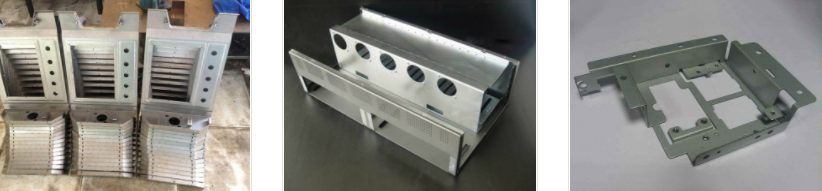
Ⅰ. How sheet metal is manufactured?
1.1 Design & Unfolding
Design Input: Start with customer requirements or prototypes, using CAD software (e.g., SolidWorks, AutoCAD) to create 3D models. Convert these into 2D flat patterns (unfolded drawings) with annotations for bend lines, tooling holes, and press-fit features.
Unfolding Principles:
◇ Gap Selection: Use a 0.2mm gap for sheets ≤2mm thick and 0.5mm for 2–3mm sheets to prevent interference during bending.
◇ Burr Direction: Align burrs with the processing flow to avoid surface scratches in subsequent steps.
◇ Section Views: For complex parts, include cross-sections to clarify features like countersinks or threaded inserts.
1.2 Cutting (Blanking)
Process Options:
◇ Laser Cutting: ±0.1mm precision, ideal for intricate shapes but slower for small batches.
◇ CNC Punching: Cost-effective for high-volume production; however, edges may have burrs.
◇ Shearing: Suitable for straight-cut strips or blocks without holes (±0.2mm accuracy).
Key Controls:
◇ Material Thickness Tolerance: Ensure compliance with standards (e.g., SPCC steel: ±0.05mm).
◇ Surface Inspection: Check for defects like black spots, corrosion, or dents.
◇ Deburring: Remove sharp edges with files or sanders to prevent bending inaccuracies.
1.3 Forming
Bending:
◇ Sequence Rule: Bend from inner to outer features, smallest to largest bends, and special features first.
◇ Die Selection: Use a die opening 6x the sheet thickness (e.g., 9mm for 1.5mm steel).
◇ Angle Control: Maintain ±1° tolerance; verify critical angles with a protractor.
Stretching & Flanging:
◇ Maintain a minimum hole-edge distance of 3x sheet thickness and ≥6x between holes.
◇ Flanging with tapping enhances thread strength for thin sheets (≤2mm).
Press Fitting:
◇ Align press-fit studs with pilot holes; ensure no protrusions or depressions.
◇ Post-process checks: Push tests for structural integrity and thread gauges for accuracy.
1.4 Welding & Joining
Welding Methods:
◇ TIG (GTAW): Best for aluminum, producing clean, pore-free welds.
◇ MIG (GMAW): High efficiency for steel but generates more spatter.
◇ Resistance Welding: Requires flat, wrinkle-free surfaces.
Critical Checks:
◇ Weld Strength: Test welded nuts with torque wrenches.
◇ Grinding: Smooth welds to match bending radii; avoid sharp transitions.
◇ Slag Removal: Clean threads and holes to prevent assembly issues.
1.5 Surface Treatment
Powder Coating:
◇ Pretreatment: Degrease → phosphate coating for adhesion.
◇ Parameters: 60–80μm film thickness; ISO 2409 adhesion rating 0 after baking.
Electroplating (Zinc):
◇ Coating Thickness: 8–20μm (minimum 6μm); salt spray resistance: 72h for colored zinc, 48h for blue/white.
Anodizing:
For aluminum: 5–25μm film, HV600 hardness, excellent wear resistance.
Sandblasting before anodizing is critical step to improve the experience.
Ⅱ.what are the cheapest types of sheet metal?
For those seeking affordable sheet metal options, especially for DIY projects or budget-conscious applications, the following materials stand out as cost-effective choices:
1: Carbon Steel sheet (Hot-Rolled):
◇ Description: Carbon steel sheets, particularly hot-rolled varieties, are widely available and cost-effective. They are suitable for applications where strength is more critical than corrosion resistance, such as structural supports or brackets.
◇ Price Indicator: Generally, the price range is lower compared to stainless steel or aluminum, making it a budget-friendly option.
2: 430 Stainless Steel (Ferritic Stainless Steel):
◇ Description: Often referred to as “stainless iron,” 430 stainless steel offers better corrosion resistance than carbon steel but is less expensive than 304 stainless steel. It’s a good compromise between cost and performance for indoor applications or environments with moderate humidity.
◇ Price Indicator: It is significantly cheaper than 304 stainless steel, making it a popular choice for cost-sensitive projects.
3: Coated Steel Sheets (e.g., Color-Coated Steel):
◇ Description: These sheets are steel coated with a layer of zinc or other materials to enhance corrosion resistance. Color-coated steel sheets, in particular, are pre-painted and offer aesthetic appeal along with durability. They are commonly used in construction for roofing, wall cladding, and interior decoration.
◇ Price Indicator: Coated steel sheets are generally more affordable than solid aluminum sheets and provide a good balance of cost and performance.
4: Aluminum Alloy Sheets (Lower-Grade Alloys):
Description: While aluminum is generally more expensive than steel, certain lower-grade aluminum alloys or thinner gauges can be cost-effective for specific applications. Aluminum is lightweight, corrosion-resistant, and easy to work with, making it suitable for decorative elements or projects where weight is a concern.
Price Indicator: Look for thinner gauges or less expensive alloys to keep costs down.
Number5: Galvanized Steel Sheets:
◇ Description: Galvanized steel is coated with a layer of zinc to prevent rust and corrosion. It’s commonly used in outdoor applications, such as fencing, ductwork, and automotive parts. Galvanized sheets are durable and relatively inexpensive compared to other corrosion-resistant materials.
◇ Price Indicator: It offers good value for money, especially for projects requiring outdoor durability.
Ⅲ.Will sheet metal rust?
Yes, but it depends on:
1 Material Type:
Prone to rust: Carbon steel sheet (e.g., mild steel), uncoated cold-rolled steel.
Resistant to rust: Stainless steel (304/316), galvanized steel, aluminum sheets, copper sheets.
2 Surface Treatment:
Coatings like paint, powder coating, or electroplating prevent rust by blocking moisture/oxygen.
Galvanization (zinc coating) provides long-term protection.
3 Environment:
High humidity, saltwater, or chemicals accelerate rusting.
Dry indoor settings slow corrosion.
Quick Tips to Prevent Rust:
◇ Choose stainless steel sheet or aluminum sheet for harsh environments.
◇ Use galvanized steel sheet for outdoor projects.
◇ Apply coatings (paint, powder coating) to carbon steel.
◇ Avoid mixing different metals (e.g., steel + aluminum) to prevent galvanic corrosion.
Ⅳ. Can sheet metal be painted?
Yes, sheet metal support painting, however, during metal sheet spraying, defects such as sags (running/dripping), orange peel, pinholes/bubbles, and interlayer delamination often occur due to improper process control. To mitigate these issues, the following standardized measures are recommended:
1. Key Issues and Causes
Sags (Running/Dripping)
Causes: Low paint viscosity, excessive coating thickness, improper spray gun distance/speed, or low ambient temperature.
Orange Peel
Causes: Poor paint atomization (high viscosity/low pressure) or excessive baking temperature accelerating surface curing before leveling.
Pinholes/Bubbles
Causes: Air/moisture contamination in paint, inadequate surface pretreatment (residual oil/water), or rapid solvent evaporation during curing.
Interlayer Delamination
Causes: Insufficient curing of the primer, or incompatibility between primer and topcoat leading to chemical reactions.
2. Key Principles
“Prevention Over Repair”: Address root causes (e.g., contamination, parameter deviations) rather than relying on post-defect corrections.
“Data-Driven Optimization”: Align processes with paint manufacturer guidelines and industry standards (e.g., ISO, ASTM).
Dig further about the surface treatment for metals and plastics.
Ⅴ. Which sheet metal is the easiest to joint and solder?
1. Copper sheet
Best choice: High thermal conductivity, ductile, and forms easy-to-remove oxides. Works with most solders (e.g., tin-lead, lead-free).
2.Brass (Copper-Zinc Alloy) sheet
Runner-up: Similar to copper but slightly harder; ideal for decorative or structural joints.
Moderately Challenging Metals
1.Aluminum sheet
Requires preparation: Tenacious oxide layer needs aggressive flux or abrasion; prone to overheating due to high thermal conductivity.
2.Nickel Silver (German Silver)
Moderate ease: Combines copper’s solderability with nickel’s corrosion resistance; needs flux for clean joints.
Most Difficult Metals
1.Low conductivity, stubborn oxides: Needs strong fluxes (e.g., acid-based) or silver solder (brazing) for stainless steel.
2.Steel sheets (Carbon/Stainless)
Quick Tips for Success
◇ Clean surfaces (sandpaper/acetone).
◇ Use flux (rosin for copper/brass, specialized for aluminum/steel).
◇ Control heat (adjustable soldering iron or torch).
VI: WHAT ARE THE Critical Precautions in Sheet Metal Fabrication?
1.1 Material Selection & Inspection
Consistency: Use the same material grade and origin for all components in a product.
Compliance: Meet ROHS standards (e.g., Cr6+ < 1000 PPM).
Protection: Apply protective films to electrolytic plates and aluminum to prevent scratches.
If you want to find the right sheet metal material for custom metal working project, please click here.
1.2 Process Parameter Control
Bending Allowance: Treat as fixed for sheets ≤4mm; measure empirically for thicker materials.
Welding Distortion: Use fixtures for complex assemblies; post-weld straightening ensures flatness.
Coating Texture: Match orange peel or sand patterns to approved samples.
1.3 Quality Assurance & Traceability
Dimensional Inspection: Verify critical dimensions (e.g., hole positions, bend heights) against tolerances.
Functional Testing: Use jigs or subassemblies to check gaps and misalignment.
Batch Management: Retain samples and log parameters for traceability.
1.4 Safety & Environmental Compliance
Machine Safety: Install guards on presses and bending machines; enforce PPE (gloves, goggles).
Waste Management: Recycle scrap metal and treat coating wastewater.
Occupational Health: Ventilate powder-coating areas to prevent dust inhalation.
Ready to bring your sheet metal project to life with precision-engineered solutions?
Contact Hitions today for expert fabrication, seamless soldering, and unmatched quality—let’s build something exceptional together!