In cutting-edge fields such as aerospace, medical orthopedic implants, and high-end automotive manufacturing, titanium alloys have become indispensable materials due to their exceptional properties. These include high strength, low density, corrosion resistance, and biocompatibility. However, Titanium Alloy Machining still meets challenges. Their unique physical and chemical characteristics pose significant challenges to the manufacturing process.
This blog delves into the core challenges of titanium alloy machining. It shares practical strategies to help enterprises break through bottlenecks and achieve efficient, precision manufacturing for global markets.
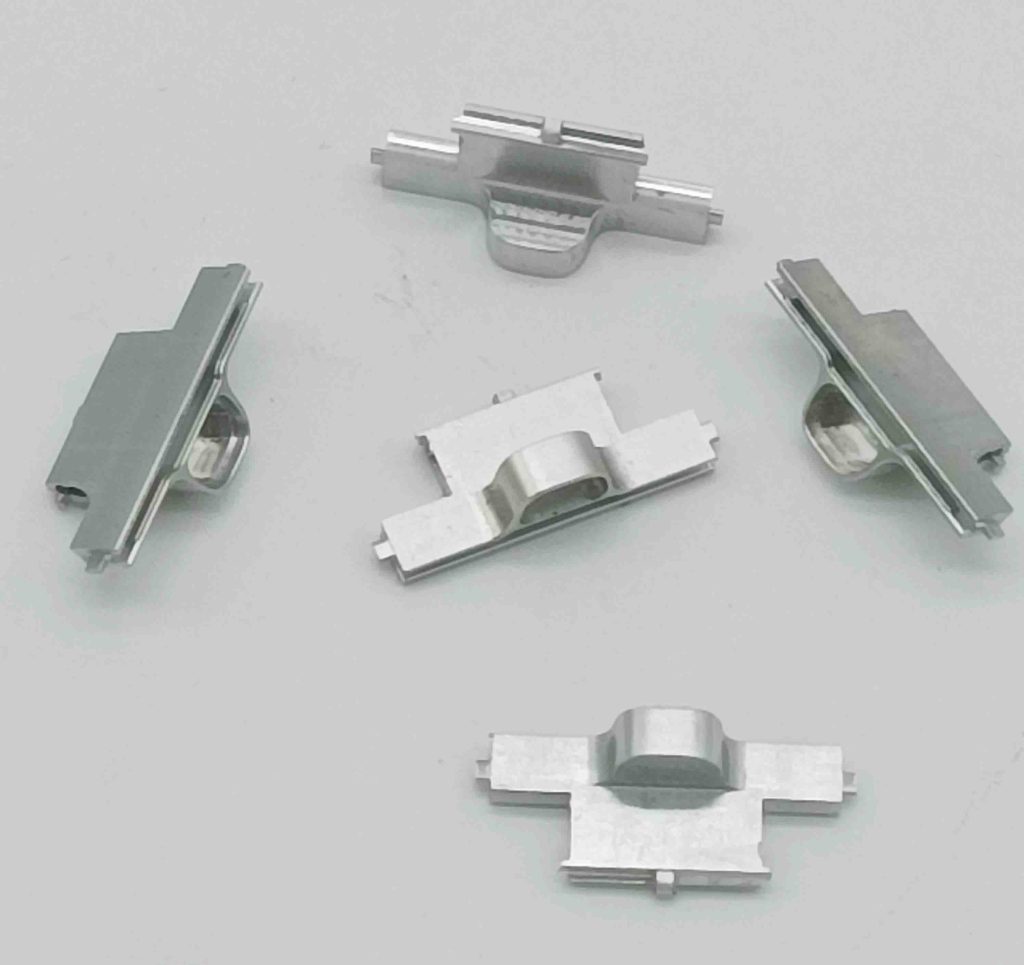
I. Four Key Challenges in Titanium Alloy Machining
1. High Cutting Temperatures and Severe Tool “Thermal Damage”
Titanium alloys have a thermal conductivity approximately 1/5 to 1/7 that of steel, causing heat to concentrate intensely in the cutting zone. This results in tool temperatures soaring above 1000°C. Consequently, it leads to tool material softening, accelerated wear, and even crater wear or chipping. Tool life can be reduced to 1/10 to 1/20 of that when in titanium alloy machining.
2. Low Elastic Modulus and Difficulty in Controlling Vibration and Deformation
The elastic modulus of titanium alloys is about half that of steel, resulting in insufficient rigidity during machining. This leads to “tool deflection,” causing surface ripples or tolerance deviations in the finished part. Vibration issues are particularly pronounced when machining thin-walled components or slender shafts, directly impacting part precision and surface quality. Know more about common key influences on cnc machining tolerance.
3. High Chemical Reactivity and Stringent Machining Environment Requirements
At elevated temperatures, titanium alloys readily react with oxygen, nitrogen, and hydrogen in the air, forming a hard, brittle surface layer (e.g., TiO₂) that exacerbates tool wear. Additionally, titanium alloys are sensitive to chloride ions. Residual chlorine in conventional cutting fluids may induce stress corrosion cracking, necessitating the use of specialized cutting fluids.
4. Significant Work Hardening Tendency and Fluctuating Cutting Forces
Machining titanium alloys often results in a hardened layer on the machined surface. This layer has a hardness up to 1.5–2 times that of the base material, increasing subsequent cutting forces and accelerating tool wear. Moreover, the uneven deformation of titanium alloys causes frequent fluctuations in cutting forces, further shortening tool life.
In general, the challenges associated with titanium alloy machining often lead to elevated costs. This is because, when clients place an order for a single part, manufacturers may sometimes need to produce over 20 pieces, selecting only the best one out of the lot to deliver. Consequently, quotes from some manufacturers can be quite high. However, partnering with a proficient CNC machining shop that has extensive experience in machining similar titanium alloy materials can result in relatively lower prices.
II. Five Proven Strategies for Titanium Alloy Machining
Strategy 1: Optimize Tool Materials and Coatings
- Tool Material Selection: Prioritize cemented carbide (e.g., YG8, YG10), ceramic, or cubic boron nitride (CBN) tools. For cemented carbide, higher cobalt content (8%–12%) enhances toughness.
- Coating Technologies: Apply physical vapor deposition (PVD) or chemical vapor deposition (CVD) coatings such as TiAlN, AlCrN, or diamond coatings. These reduce friction coefficients, minimize heat transfer, and extend tool life by 3–5 times.
- Case Study: An aerospace company increased tool life from 20 minutes to 2 hours. They improved machining efficiency by 40% using a TiAlN-coated cemented carbide tool in titanium alloy machining.
Strategy 2: Fine-Tune Cutting Parameters for Balance
- Low Cutting Speeds: Maintain cutting speeds between 30–80 m/min (roughing) or 15–30 m/min (finishing). This prevents rapid tool failure due to high temperatures.
- High Feed Rates: Use larger feed rates (0.1–0.3 mm/r) to reduce machining time while lowering cutting temperatures.
- Small Cutting Depths: Limit finishing depths to ≤0.5 mm to mitigate the impact of work hardening on tool life.
- Data Reference: A medical implant manufacturer reduced titanium alloy bone screw machining time from 12 minutes to 5 minutes. They achieved a surface roughness (Ra) of ≤0.8 μm by optimizing parameters.
Strategy 3: Enhance Cooling and Lubrication to Suppress Thermal Damage
- High-Pressure Cooling: Employ 30–100 bar high-pressure cooling systems to precisely deliver coolant to the cutting zone. This system rapidly removes heat and forms a lubricating film. It can lower cutting temperatures by 30%–50%.
- Minimum Quantity Lubrication (MQL): Mix trace amounts of lubricating oil (5–50 ml/h) with an air-mist to reduce coolant usage by over 90%. This method significantly decreases tool wear rates by 40%.
- Coolant Selection: Choose synthetic coolants containing extreme-pressure additives and free of chlorine to prevent chemical reactions with titanium alloys.
Strategy 4: Optimize Processes and Fixture Design to Reduce Vibration and Deformation
- Layered Cutting: During roughing, use layered milling with cutting depths set to 1/2–2/3 of the tool diameter. This minimizes cutting force fluctuations.
- Rigid Fixturing: Utilize hydraulic chucks or vacuum chucks to enhance workpiece rigidity and reduce vibration. For thin-walled components, fill with low-melting-point alloys or polyurethane foam for additional support.
- Tool Path Planning: Adopt climb milling (down milling) to reduce impact. Alternatively, consider using helical interpolation milling instead of traditional linear milling for smoother cutting force transitions. Looking for a trustable manufacturer partner, click HITIONS PORTFOLIO.
Strategy 5: Leverage Advanced Machining Technologies
- High-Speed Machining (HSM): On dedicated high-speed machines (spindle speeds ≥10,000 rpm), achieve “heat control through speed”. Combine high cutting speeds (100–300 m/min) with low feed rates (0.05–0.15 mm/z). This reduces the heat-affected zone.
- Laser-Assisted Machining (LAM): Preheat the workpiece surface to 200–500°C using a laser, lowering cutting forces and improving machinability. Tool life can increase by 2–3 times.
- Additive Manufacturing (AM): For complex titanium alloy parts (e.g., aerospace engine blades), employ selective laser melting (SLM) or electron beam melting (EBM). These techniques directly fabricate components, minimizing machining allowances and processes.
Besides, a well-considered and rational design is crucial to ensure the production of flawless titanium alloy parts post-machining, learn more about cost saving design tips in cnc machining.
III. Future Outlook: Intelligence and Sustainability
As Industry 4.0 advances, titanium alloy machining is evolving toward intelligence and sustainability:
- Smart Monitoring Systems: Use sensors to monitor cutting forces, temperatures, and vibrations in real time. This enables dynamic parameter adjustments for adaptive machining.
- Digital Twin Technology: Build virtual machining models to predict tool wear and workpiece deformation in advance, optimizing process plans.
- Dry Machining and Near-Net Shaping: Explore coolant-free machining techniques combined with near-net shaping processes. These may include precision casting and powder metallurgy to further reduce material waste and environmental impact.
Machining titanium alloys is undeniably challenging, but not insurmountable. By integrating advancements in material science, process innovation, and intelligent technologies, enterprises can overcome these hurdles. They can gain a competitive edge in high-end manufacturing. As technologies continue to evolve, the efficiency and cost-effectiveness of titanium alloy machining will improve. This will drive transformative changes across industries worldwide.